Monday, 12 July 2010

The World Cup: National Stereotype Bingo


Refreshing Ghanaians, industrious Koreans, flamboyant Brazilians, arrogant Frenchmen, negative Italians and efficient Germans.

While the World Cup may have deprived us of many things (daylight, the ability to form a non-football related conversation), the British media’s coverage of the tournament certainly provided us with an abundance of national stereotypes. Indeed, soundtracked by BBC or ITV commentary, watching an international football match became more like an introduction to a game of national stereotype bingo.

The opening fixture between hosts South Africa and Mexico set the tone, with Peter Drury rejoicing at the “wonderful sights and sounds” of a “colourful” crowd. This was, after all, the first World Cup to be staged in Africa, a continent supposedly without anything but a smile on its face.

It was Ghana who were truly smothered by patronising ITV commentary, with Clive Tyldsley particularly belittling in his reference to the Black Stars’ “refreshing” approach. With every mention of the “colour” and “big African smiles” of supporters and players alike, it was as if the entire squad were having their hair ruffled by an army of elderly relatives.

Ghana’s quarter-final loss to Uruguay was, of course, a crushing blow to the whole of little Africa, and our friends in the studios had the knives out for Luis Suarez, Uruguay’s willing pantomime villain. Suarez’s handball denied Ghana a semi-final place, helped big bad Uruguay (population of three million people) to a fourth-placed finish and allowed Adrian Chiles and his cronies to crank up the condescension with heaps of gushing sympathy.

South Korea were treated similarly even as they beat Greece 2-0, with analysts and pundits repeating like a mantra the now institutional stereotype of “industrious” Asian footballers. The guile of Park Ji-Sung was irrelevant, likewise South Korea’s collectively slick performance. What ITV wanted us to see was just how hard those little South Koreans had worked.


BBC were seldom any better on the opening day, as they indulged in predictable caricatures of the French squad. “Plenty of Gallic shrugs,” Steve Wilson helpfully observed, reminding those watching at home that Raymond Domenech’s men are little more than an assembly of ‘cheese-eating surrender-monkeys’.

With their self-destructive penchant for player coups and disinterested performances, though, France were arguably one team who actually strengthened their country’s stereotypes.

Brazil and Holland, meanwhile, were determined to confound their respective traditions of ‘Samba Football’ and ‘Total Football’ flamboyance. With every gruff holding midfielder who replaced a dainty playmaker, their managers Bert Van Marwijk and Dunga seemed to be revelling in their elaborate refusal of the long-standing labels attached to their sides.

Tyldsley did not appear to have seen any of Brazil’s matches, however, as he welcomed a headed goal of theirs with the disbelieving screech: “Brazil score a British goal!” How surprising that the diminutive South Americans can jump and emulate their Anglo-Saxon peers, who had of course enjoyed such a fruitful tournament.

England did seem conspicuous by their absence in these long and recurring lists of stereotypes. So, when BBC and ITV commentators present their warped coverage of Euro 2012, why not introduce their viewers to the “underwhelming English”?

Tuesday, 29 June 2010

The Not So Golden Generation


As the hysteria subsides and cries of injustice die away, England is coming to terms with the passing of what was supposedly a golden generation of footballers.

England’s 4-1 defeat to Germany was met with outrage and disbelief, and then a feeling that an entire country had been cruelly denied the glory which was rightfully theirs.

Commentators, journalists and fans alike were all incredulous that Germany had the temerity to spoil their party; overlooking how the Germans had assembled a side that plays some of the most confident, thrilling football in the world.

For once, it was not the odious players who truly soured the occasion, but the voyeuristic reaches of the media.

Frank Lampard accepted defeat manfully, and as he exchanged post-match pleasantries with Germany's excellent Bastian Schweinsteiger, there was in his weary gaze more than the distant look of a beaten man.

At 32, Lampard is a veteran English pin-up of the Premier League, and he – along with his other much-vaunted (and ultimately over-hyped) team-mates – saw this World Cup as a last shot at international immortality.

This potential glory was considered a divine right by others. The Sun boasted on their front page of England’s ‘E-A-S-Y’ group when the World Cup draw was made, and this sense of entitlement seeped through hordes of English media camped in South Africa.

The chest-beating red tops and rolling news channels were missing the point, though. Indeed, their reading of the situation was as far from reality as an Emile Heskey shot is from goal.


This, after all, was no golden generation. Since the halcyon days of a semi-final defeat in 1990, England have failed to qualify for two major tournaments and have twice been eliminated at the group stage. Golden indeed.

And even after England showed themselves to be distinctly mediocre in their plodding displays against the USA and Algeria, the media still could not fathom how a team as excellent as Germany’s could outclass their dear Three Lions so thoroughly.

England players were actually commendably mature in defeat, though the media glare around them was unrelenting. While Lampard and Steven Gerrard magnanimously accepted that they had simply been outplayed, the BBC’s Alan Hansen bleated about "average" Germans, and Sky's reporters beat the "we woz robbed" drum of self-pity deep into the Bloemfontein night.

This golden generation, we had been led to believe, simply required an alchemist to mould match-winners out of this mound of talent. Fabio Capello, a manager whose Midas touch is unquestioned at club level, was seen as the man to turn these underachievers into all-conquering champions. As this dream faded, Capello was bestowed with a new identity: the scapegoat.

In truth, however, were these players really 'underachieving'? By the lofty, and often unrealistic, expectations of a ruthlessly demanding media, nothing less than world domination would suffice.

But as long as the Premier League and its cheerleaders continue to blow their own trumpets louder than a continent of vuvuzelas, expectations of international success will remain nothing other than a blind expression of self-importance.

Apologies for the delay in posts - I've been busy writing for news.ladbrokes.com
Thanks to OptaJoe for stats.

Tuesday, 13 April 2010

Voting in flavour

The campaigns for next month's general election have so far been bland. A steady dribble of uninspiring manifestos have blurred all the major parties into one, so to inject some life into proceedings, here's the definitive guide to the candidates. In snack form.


Tories: Walker's Steak & Onion
Supposedly reinvented and radical but, in truth, just a recycled idea (Beef & Onion) which was always a second-rate product.

Labour: Walker's Sensations
A more middle-class brand than its original incarnation, arguably losing its soul in a whirlwind of buffalo mozarella and fancy advertising.

Lib Dems: Salt & Vinegar Discos
The dominant force a long time ago, steadily regaining a reputation as a genuine alternative.

Plaid Cymru: Ruffles
Initially laughed off by its loftier peers, has gradually built itself a growing, loyal following.

Scottish National Party: McCoy's Flame Grilled Steak
Unswervingly independent in its rise to the top. Substantial.

Saturday, 10 April 2010

The demise of the divine right


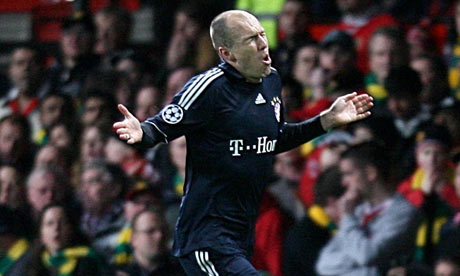
Arjen Robbens’s goal against Manchester United on Wednesday silenced not only Old Trafford, but the scores of British fans and media who have long believed that success is their divine right.

With the English stranglehold of the Champions League in recent years has come an unhealthy sense of entitlement, from players, supporters and the media. This season, however, has been a wake-up call, and the reality has been particularly hard-hitting this week.

With Arsenal and Manchester United crashing out in the quarter-finals, and Chelsea and Liverpool ejected at earlier stages, this season’s Champions League final will be the first to be contested without an English side since 2004.

And the dearth of British representation in the semi-finals has sparked a spate of unnecessary investigations into a non-existent crisis for English club football. This worry seems all the more ridiculous when one considers that both Liverpool and Fulham have reached the final four of the Europa League.

Rather than scrabble for reasons for this supposed emergency in British football, recent events should instead encourage fans and commentators to rein in their expectations, which have long since spiralled into realms of the stratospheric.

These bloated expectation levels are the manifestation of an innately British notion of entitlement, and it is this presumption of success which spawned the incredulity Manchester United fans felt after their defeat this week to Bayern Munich.

How embarrassing, they must have thought, to lose to these overachieving German upstarts. In truth, the loss should not have come as an earth-shattering surprise. Bayern are a footballing giant, with four European Cups to their name, yet the bafflement which met last week’s result suggested that they’d won with Angela Merkel in goal.


Sir Alex Ferguson could have acknowledged Bayern’s well-deserved aggregate win, but he instead accused them of foul play. “Typical Germans,” Ferguson complained, perhaps forgetting the Roy Keane-led posses which used to surround Premier League referees on a weekly basis, to United’s advantage.

More than an inability to admit to being outplayed, what this reveals is the unrealistic expectations weighing down British sport.

Earlier this year, Team GB was forced to defend its medal tally at the 2010 Winter Olympics, when Hayley Williams’ gold in the skeleton proved to be the sole success. Although this was an improvement on the one silver Team GB claimed at Turin in 2006, the knives were out for Britain’s winter Olympians.

Again, the reaction was mystifyingly hysterical. Britain, after all, does not traditionally specialise or excel in winter sports, and this is reflected financially. British snowboarding cross competitor Zoe Gillings voiced her frustrations about Team GB’s shortcomings at the games, but was also sceptical about the criticism the athletes face: “Without the funding, we’re not going to get anywhere.”

The demands for success are similarly implausible in the summer’s equivalent, even though it is widely recognised that Olympic sports trail far behind football, rugby and cricket in terms of participation, audiences and funding.

Whatever the sport, the British consider themselves to have a divine right to success. Every year at Wimbledon, Andy Murray is expected to win, regardless of other players’ form or the Scot’s own slight aversion to grass court tennis.

Similarly, whenever the football World Cup is mentioned, what immediately follows is self-righteous trumpeting of the spirit of 1966 and a series of ill-informed predictions of an England triumph. The merits of opposing teams are overlooked, and a predictable English quarter-final exit is mourned like the death of a monarch, or in The Sun’s case, seen as a global conspiracy against "our 'onest lads".

As this year’s World Cup in South Africa approaches, we have already been inundated with panic-stricken injury updates and boasts of England’s apparently inevitable success, but perhaps recent disappointments will have at least created a ripple of doubt among the sea of self-assurance.

Thursday, 25 March 2010

Cardiff City: Bigger than Barcelona?


An exasperating 1-1 home draw with Sheffield United may not represent the makings of a European superpower, but Cardiff City’s capacity to underwhelm has earned them comparisons with Barcelona and Real Madrid.

Sam Hammam’s infamous reign as Cardiff’s owner was littered with claims of being ‘bigger than Barcelona’, only for these boasts to be tempered by defeats to the mighty likes of Darlington and Bournemouth.

Hammam has since departed with a debt-ridden vapour trail in his wake, but Cardiff’s current manager, Dave Jones, has now added his voice to the unlikely correlation between the Bluebirds and the Catalan giants, claiming that expectations at Cardiff are as high as those surrounding Barcelona and Real Madrid.

And while Cardiff’s debts of £1.75m seem modest in light of Real Madrid’s summer splurge of over £200m, Jones’s association is not as incongruous as first impressions may suggest.

The historian Gwyn Alf Williams was right when he referred to Welsh people as ‘Italians in the rain’, alluding to their Mediterranean passion and emotional extremity, albeit in a rather less glamorous climate.

Although it is uncertain whether Jones is familiar with Williams’ work, the manager did seem to echo the historian’s sentiments when he said: "You lose a couple of games around this part of the world and it's as if it's all fallen apart."

As well as recognising the volatile nature of Cardiff City fans’ reactions, Jones also appears to have grasped how heavily the national mood of Wales is influenced by the fortunes of its sports teams.

The national rugby side, for example, spark a glowing sense of nationwide glee whenever they win a Six Nations Grand Slam. Parties are thrown, newspaper headlines boast of imminent world domination, and calls for a commemorative national holiday are vociferously backed at an impromptu Shakin Stevens concert staged at Cardiff Castle.

Losses to England or Italy, however, prompt deep and gloomy self-reflections, as the country slumps into a state of misery usually only applicable to a child who has excitedly opened a Christmas present, only to find a copy of Danny Dyer’s Football Foul-Ups DVD, staring blankly from the debris of wrapping paper.

The same is true of football fans, and Jones’s tongue was not quite so firmly in his cheek as one would have first thought when he said: "You have the expectation levels of Barcelona or Real Madrid-types here.”

Grumbles of discontent filled the rain-sodden Cardiff City Stadium as the home side were held by the artisan Sheffield United this week, but as the Bluebirds still occupy a play-off spot in their quest for promotion, it seems fair for Jones to think that expectations may be a little lofty.

Jones’s Spanish connection might also add another dimension to Cardiff’s upcoming derby match against Swansea – what we may now consider to be South Wales’s answer to ‘El Clasico’.

Swansea, playing in white, will at least be wearing a kit similar to Real’s, while Cardiff have a squad oozing with as much flair and panache as any Barca side. The Catalans may have Thierry Henry, but Cardiff’s attack is led by Jay Bothroyd, and Barcelona’s so-called best player in the world, Lionel Messi, is little more than a poor man’s Peter Whittingham.

When Swansea visit, the Cardiff City Stadium (a name no catchier nine months after its unveiling) will be rumbling with animosity, and perhaps in this hateful cauldron befitting of the Nou Camp, Jones’s comparison may seem a little less fanciful as South Wales’s superpowers collide.

Sunday, 7 March 2010

'Not that type of player': How football's limp excuses wear thin


Ryan Shawcross was an unassuming, quiet presence on the England bench at Wembley in midweek, a far cry from his tumultuous last appearance.

Two images defined last weekend’s football action: a tearful Shawcross leaving the Britannia Stadium pitch after being sent off for his tackle on Aaron Ramsey, whose crumpled leg was the match’s other enduring sight.

Shawcross’s manager at Stoke City, Tony Pulis, was quick to defend his player: “Ryan is not that type of lad.” This feeling was then recycled as post-match interviews mulled over the incident, and it became evident that we would hear the same old excuses.

It almost goes without saying that Shawcross didn’t mean to break Ramsey’s leg. What grates, however, is the repetitive, inane nature of the defence offered, and how, instead of taking responsibility for their reckless actions, the perpetrators are portrayed as victims.

Ramsey’s Arsenal team-mate Eduardo fell victim to a similar injury in February 2008, when a tackle from Birmingham City defender Martin Taylor left his ankle hanging by a thread.

Like Ramsey, Eduardo’s career was in jeopardy, and also like the Ramsey case, the offending player’s manager used the same limp excuse, as Alex McLeish said: "Martin's not a dirty player."

This hollow sentiment is uttered too often, and after Eduardo’s injury, Wenger said: "The worst thing you hear after is that 'he's not the kind of guy who usually does that', but you need to only kill one person one time - it's enough."

Ramsey’s injury was the third such incident in less than four years, after Abou Diaby suffered serious damage to his ankle after a terrible challenge from Sunderland’s Dan Smith. Again, the excuse offered by the offending side was feeble, as then Sunderland caretaker manager Kevin Ball said: "Dan Smith is by no means a dirty player.”

If Shawcross had caused an injury by crashing his car, Pulis is unlikely to have offered the defence: “He’s not that type of driver.” Nobody involved in a car crash purposefully drives into another vehicle, but it is to be expected when the driver responsible has their licence suspended.

In this case, then, why are footballers so reluctant to accept responsibility when they are involved in such serious incidents?

Shawcross may not have been trying to shatter Ramsey’s leg, but the horrific collision was the result of a team’s bloody-minded determination to physically unsettle technically superior opponents.

And the stomach-churning image of Ramsey’s decimated shin is not only the result of one team’s efforts to ‘get in the faces’ of the Arsenal players, but a product of a wider culture of thuggery.

As Wenger notes, these are not merely unfortunate coincidences: "It goes with the idea that to stop Arsenal you have to kick Arsenal and that kind of thing [Eduardo’s injury] was waiting to happen.”

When pundits discuss ways of beating Arsenal, they invariably mention how the Gunners “don’t like it up ‘em”, and that teams will succeed if they “get in their faces” and “stop them playing”.

This message then seeps into Premier League changing rooms, where the likes of Pulis and McLeish urge their sides to rise to the challenge in an unswervingly robust manner.

And, deliberately or not, this physical approach eventually culminates in ugly scenes such as those at the Britannia Stadium.

Published in Leeds Student on Friday, March 5, 2010
Maybe Dara O'Briain is a regular reader:
http://www.guardian.co.uk/football/blog/2010/mar/06/aaron-ramsey-broken-leg-ryan-shawcross

Friday, 29 January 2010

The graveyard shift

Whether it is a confused Spanish playmaker being shown around Birmingham or a promising Belgian midfielder taking in the sights of Wolverhampton, the January transfer window represents new beginnings for footballers.

For managers, however, the biting cold of British winter is a harbinger of change for the worse.

Sackings have been typically commonplace this winter, but what has been particularly eye-catching is the funereal manner of these dismissals.

News of Manchester City’s December sacking of Mark Hughes was broken to viewers like a state funeral. Pundits were asked to pay tribute to a “good man”, and other managers were quick to praise a fellow professional who “deserved better”.

Gary Lineker dispensed with his default mode of radiant smugness to glumly announce Sparky’s departure, and Match of the Day ended their usually chirpy closing montage with commentator Steve Wilson’s despairing mention of Hughes’ “lingering wave”.

Even Arsene Wenger, the supposed ray of intellectual hope in the landfill site of Premier League clichés, succumbed to the solemnity by adding that “it is always very sad when a manager loses his job”.

The most sombre of tributes was paid to Alan Irvine, who was fired by Preston. His successor Rob Kelly vowed that the club would “carry on as we did before – it’s what Alan would have wanted.”

He also mourned Irvine as “not just a great manager but a great person”.

Despite his morbid departure, Irvine has since found employment at Sheffield Wednesday. And judging by his immediate success at Hillsborough, Irvine’s move is proving to be a resurrection.


Paul Hart’s exit from Queen’s Park Rangers did not cause such a stir. This managerial casualty was instead brushed aside like one of many incidental fatalities in a gangster film.

The indifference should come as no surprise. Hart (pictured) was the ninth manager to be dispatched by QPR owner, Formula 1 mogul and pseudo-mafia boss, Flavio Briatore.

Wary of Briatore’s fearsome reputation, media coverage of Hart’s demise was muted. Rolling news channels were conspicuously unwilling to expand on the issue, while newspapers were similarly careful not to upset Briatore.

Similarly bereft of sentiment was the end of Gary Megson’s tenure at Bolton. Like Hart, the response to Megson’s demise was underwhelming in terms of sympathy, somewhat like the national feeling of indifference induced by the death of Bernard Manning.

Bolton fans had long been clamouring for his dismissal, and when the fateful moment arrived, it was met with the fervour usually reserved for the gallows.

Linguistically, managerial fatalism comes as no surprise. Each rumoured sacking is met with tabloid headlines and studio chatter of ‘nails in the coffin’ and ‘dead men walking’.

Some managers, such as the gloomy, vortex-eyed Avram Grant, are a step ahead of their peers, appearing to already be half dead as they morbidly prowl their technical areas.

Grant’s club, Portsmouth, have recently had a transfer embargo lifted, and they will be hoping that an influx of new faces breathes new life into the relegation-threatened side.

Amid the chaos of the transfer window’s frantic closure, the end of January at least offers a slither of hope. Spring is a not too distant prospect, and with the almost bearable climes of February, comes the realisation for managers that they may have survived the culling season.